[ Areas We Serve ]
Amelia Court House

Quick Free Estimates To Anyone Who Fills Out Our Form Below.
All fields are required.
Step-by-Step Guide to Installing a Driveway Culvert
If your property has a long gravel driveway or crosses a ditch, you’ve probably seen how heavy rain can wash out the surface or create deep puddles. The best solution? A driveway culvert installation.
A culvert pipe helps channel water underneath your driveway, protecting your property from flooding and erosion. In this guide, we’ll walk you through the step-by-step process of installing a driveway culvert — and explain why hiring professionals like RVA Construction Services ensures lasting results.
What Is a Driveway Culvert?
A culvert is a pipe or structure that allows stormwater to flow beneath a driveway, road, or pathway. It prevents water from pooling, washing away gravel, or damaging your property’s foundation.
Common materials used for culvert pipes include corrugated metal, concrete, and HDPE (plastic). The right choice depends on your property’s water volume, soil type, and local drainage requirements.
Step 1: Site Planning and Evaluation
Every successful culvert installation starts with proper planning.
Inspect your drainage area and determine where water naturally flows.
Measure the width and depth of the ditch to determine the right culvert size.
Check local permits or codes to ensure compliance.
Pro Tip: A poorly sized or improperly sloped culvert can cause water backups, erosion, and long-term damage — so precision matters.
Step 2: Choose the Right Culvert Pipe
Different materials offer unique benefits:
Corrugated Metal Pipe – Extremely durable and ideal for heavy traffic.
HDPE Pipe (Plastic) – Lightweight, corrosion-resistant, and easy to install.
Concrete Pipe – Strong and long-lasting, but requires machinery to install.
At RVA Construction Services, we help property owners choose the best culvert material for driveway drainage and long-term stability.
Step 3: Excavation and Grading
Once the pipe type and location are set, it’s time to dig the trench.
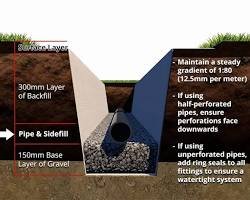
The trench should be slightly wider than the culvert pipe.
Maintain a steady slope so water flows smoothly through.
Ensure the inlet and outlet ends align with your existing ditch or drainage path.
Proper grading prevents standing water and ensures efficient water flow during storms.
Step 4: Preparing the Base
A strong foundation is essential.
Add a few inches of gravel or crushed stone at the trench bottom.
Compact it tightly to create a stable base.
This layer supports the culvert and improves water drainage under the pipe.
Step 5: Installing the Culvert Pipe
Carefully place the pipe into the trench.
Make sure it follows the natural slope.
Check that the pipe extends slightly beyond both driveway edges.
For multi-section pipes, ensure all joints are sealed to prevent leaks.
Our professional team uses precision grading tools to make sure every culvert is installed with exact alignment for maximum efficiency.
Step 6: Backfilling and Compacting
Once the pipe is in place, backfill the trench with gravel and compact it gradually:
Add fill material evenly on both sides of the pipe.
Compact each layer to prevent shifting or settling.
Finish with a top layer that matches your driveway’s elevation and surface type.
For gravel driveways, a fresh top layer of crushed stone provides a clean, finished look.
Step 7: Testing and Inspection
Before wrapping up, it’s important to test your culvert.
Pour water through or observe during rainfall to ensure proper flow.
Check that there’s no pooling, clogging, or erosion at either end.
A properly installed culvert will keep your driveway solid, dry, and accessible year-round.
Why Hire a Professional for Driveway Culvert Installation?
While DIY culvert installation might seem tempting, professional installation ensures long-term performance and compliance with local drainage standards.
At RVA Construction Services, we specialize in:
✅ Driveway culvert installation
✅ Culvert pipe replacement
✅ Culvert repair and maintenance
✅ Gravel driveway grading and resurfacing
We use the right tools, materials, and slope calculations to guarantee effective water flow and prevent costly drainage problems in the future.
Final Thoughts
A properly installed driveway culvert is more than just a pipe — it’s a vital part of your property’s drainage system. It protects your driveway, prevents erosion, and keeps water flowing where it should.
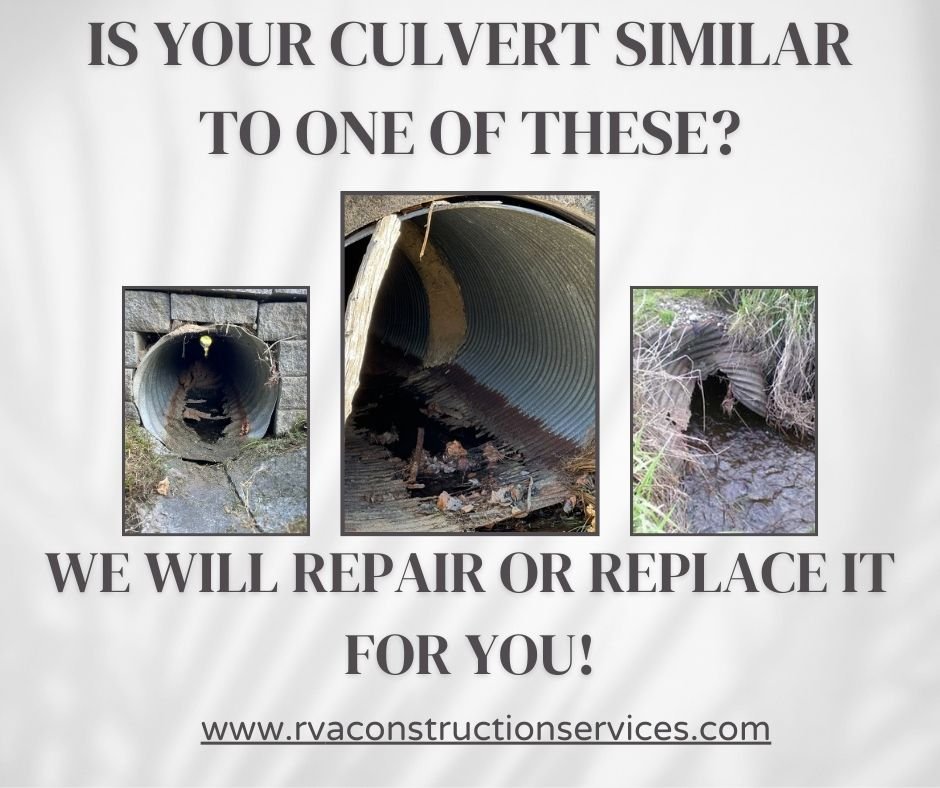
Whether you’re replacing an old, damaged culvert or installing a new one, RVA Construction Services can help you get it done right — efficiently, safely, and built to last.
Get Professional Culvert Installation Near You
Looking for culvert installation or replacement near Richmond, VA?
Contact RVA Construction Services today for reliable, affordable, and expert drainage solutions.
📞 Call Now: 804-504-2050
🌐 Visit: https://rvaconstructionservices.com/
Let’s protect your driveway and property — the right way.